What Is Serrapeptase?Serrapeptase is a proteolytic enzyme in the trypsin family. Another name for serrapeptase is serratiopeptidase. Like other proteolytic enzymes, serrapeptase helps break down proteins into smaller molecules. It can promote healing by reducing fluid and debris accumulation that can occur around tissue when an injury takes place. Today, serrapeptase is mostly isolated from the non-pathogenic bacteria called Serratia E15, which found in silkworms.
Is serratiopeptidase a painkiller? Yes, but while it can help to reduce discomfort, serrapeptase works differently than many other anti-inflammatory, pain-killing drugs. Researchers believe that enzymes like serrapeptase work to reduce inflammation by facilitating immune cell movement and regulating levels of lymphocytes at the site of inflammation. (2) It has been shown to help curb inflammation associated with:
arthritis
neurological disorders
heart disease
injuries, including wounds and sprains
sinusitis and bronchitis
fibrocystic breast disease
carpal tunnel syndrome
muscle inflammation
and many other conditions
Inflammation is the body’s natural response to injury, autoimmune conditions or infection. It’s also a key component of many physiological conditions that cause pain. Enzyme-based anti-inflammatory drugs are becoming preferred over conventional, chemical-based drugs that reduce pain because they generally have limited side effects. In countries including Japan and many in Europe, serrapeptase is currently considered the the anti-inflammatory and pain treatment of choice.
Benefits1. Helps Treat Pain and Inflammation NSAIDs are the most widely used painkillers worldwide. They’re often used with other medications, such as steroidal drugs, to treat conditions like autoimmune disorders. NSAIDs work by blocking the production of inflammatory mediators. While these drugs can provide symptomatic relief, they don’t work to actually cure underlying causes of diseases or ailments. Plus, they can lead to digestive, liver and renal-related problems when used long term.
Serratiopeptidase is effective at regulating immune cell migration from lymph nodes to inflamed and injured tissues. Both of those are beneficial for bringing tissue back to normal conditions and maintaining homeostasis. This enzyme seems to work in part by breaking down cyclooxygenase. Cyclooxygenase is an enzyme responsible for producing different inflammatory molecules. It can also reduce pain by blocking the release of bradykinin in damaged tissue, which leads to a pain response. (3)
2. Lowers Risk for Atherosclerosis Certain studies show that serrapeptase has potential to help lower atherosclerosis and heart disease risk. (4) Serrapeptase has fibrinolytic properties. That means it can help stop blood clots from forming. One way it does this is by breaking down the blood-clotting molecule called fibrin. Because it can help remove deposits, such as those formed by excess calcium, plus fight inflammation, serrepeptase may also be useful in stroke prevention.
3. Kills Bacteria and Promotes Wound Healing. Thanks to its caseinolytic properties, serrapeptase can help control harmful bacteria and prevent infections. Serrapeptase has been shown to support wound healing and wound cleaning. (5) This enzyme is also shown to repair burns and trauma to the skin. It’s useful for promoting recovery from infections and injuries because it’s been shown to:
decrease swelling
reduce formation of scar tissue
reduce excess mucus
break down excess proteins
decrease permeability of capillaries (small blood vessels)
control histamine responses
control skin temperature
and facilitate the absorption of decomposed products through blood and the lymphatic system
Additionally, serratiopeptidase has been found to enhance the activity of several antibiotics that have widespread uses in treating infections. These include the types called ampicillin, ciclacillin, cephalexin, minocycline and cefotiam.
4. Treats Respiratory InfectionsSerrapeptase is used in combination with other drugs to manage infections like sinusitis and bronchitis. This is mostly due its ability to thin and mobilize excess mucus and fluids from the body. It also supports lymphatic drainage and controls inflammatory responses.
Certain studies have found that serrapeptase can reduce accumulation of neutrophils. Neutrophils are white blood cells released from the immune system in response to an infection. Excessive accumulation of neutrophils in the lungs can thicken mucus and worsen symptoms affecting the ears, nose and throat. (6)
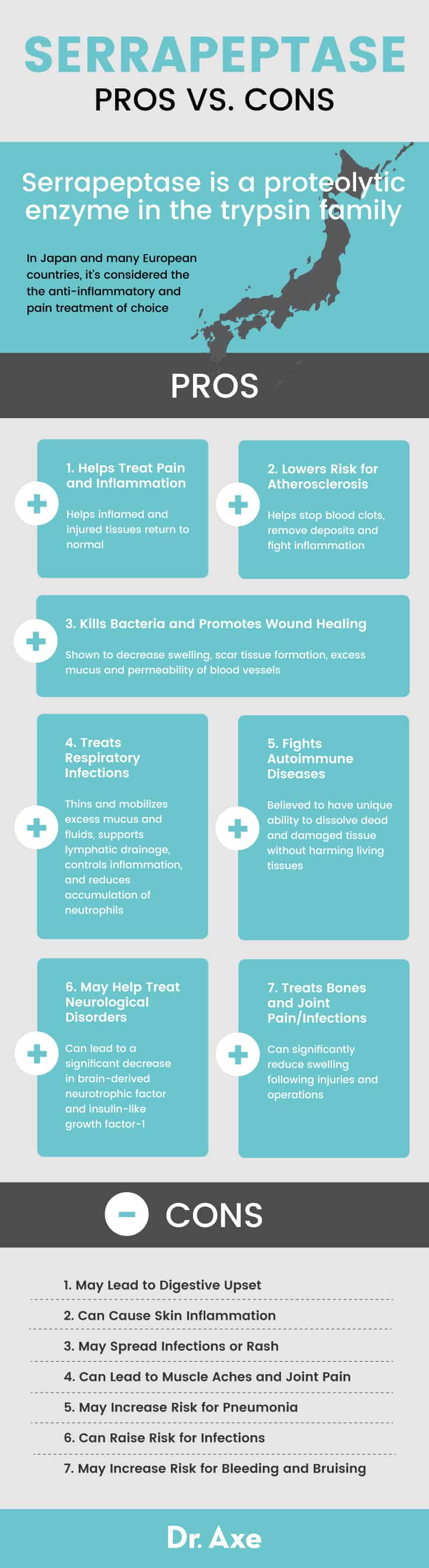
5. Fights Autoimmune DiseasesSeveral findings suggest serrapeptase and similar enzymes can be effective alone or in combination with other drugs to treat autoimmune diseases, such as rheumatoid arthritis. It’s still not entirely clear how serrapeptase works to fight autoimmune responses. However, it’s believed that the enzyme possesses the unique ability to dissolve dead and damaged tissue, created as a byproduct of the body’s healing response, without harming living tissues. (7)
6. May Help Treat Neurological Disorders (Including Alzheimer’s)Recent study results suggest that oral administration of proteolytic enzymes, including serrepeptase and nattokinase (derived from the fermented soy food natto), may be effective role in modulating certain factors that characterize Alzheimer’s disease.
Researchers believe these enzymes may have a therapeutic application in the treatment of neurological disorders because they can lead to a significant decrease in brain-derived neurotrophic factor and insulin-like growth factor-1 when compared with controls. One study found that supplementation with these enzymes caused significant declines in the expression levels of certain genes linked to Alzheimer’s in the brain. In animal studies, these enzymes have been shown to have positive effects on brain tissue and neuronal degeneration in the hippocampus and focal hyalinosis. (8)
7. Treats Bones and Joint Pain/InfectionsSerratiopeptidase is combined with broad spectrum antibiotics in the treatment of osteoarticular infection. This is a type of infection that affects the bones and joints. It can occur in both children and adults.
Certain studies have also found that serrepeptase can help to significantly reduce swelling following injuries and operations. In fact, one study found it reduced swelling by up to 50 percent after three days of treatment. (9) It’s used in the treatment of conditions that are triggered at least in part by inflammation. These include carpal tunnel syndrome, sprains, torn ligaments, and postoperative inflammation and swelling. (10, 11)
Dangers and Side EffectsResearch to date shows that serrepeptase is generally well-tolerated by adults. However, more research is still needed to show its long-term safety. According to a 2013 systematic review published in the International Journal of Surgery, “The evidence supporting the use of serratiopeptidase as anti-inflammatory and analgesic agent is based on clinical studies which are of poor methodology.” (12)
Not many of the studies conducted on serrepeptase thus far have been randomized control trials or placebo-controlled, and many have small sample sizes and short durations of treatment. The conclusion of this particular review states, “The existing scientific evidence for Serratiopeptidase is insufficient to support its use as an analgesic and health supplement.”
What are the side effects of taking serrapeptase? Possible serrapeptase side effects may include:
Digestive upset, including nausea
Skin inflammation and spreading of infections or rash (13)
Muscle aches and joint pain
Increased risk for pneumonia
Potentially increased risk for infections, such as bladder infection
Potentially increased risk for bleeding and bruising, especially when combined with drugs such as warfarin, clopidogrel and aspirin
How to Use Since 1997, serrepeptase has been sold as a dietary supplement and used in medical interventions by doctors in a number of settings. There are various ways that serrepeptase can now be administered. These include as a gel, ointment, capsule and in some cases intravenous injection.
Serrapeptase dosage depends on the condition being treated, as well as the patient’s medical history, body size, age, etc.
Below are general serrapeptase dosage recommendations:
In most studies, serrapeptase is used in adults at doses that range from about 10 to 60 milligrams per day (most often between 15 to 30 mg/day in order to be effective). However, smaller doses of only about five milligrams may also be helpful for reducing mild discomfort.
If you take antibiotics or other medications along with serrapeptase, make sure to talk to your doctor about any possible interactions and the recommended dose you should take.
When can you eat after taking serrapeptase? It’s best to take serrapeptase on an empty stomach, usually first thing in the morning or between meals. After taking it, wait at least a half hour to eat.
After eating, ideally wait at least two hours before taking serrapeptase.
Final Thoughts Serrapeptase, also called serratiopeptidase, is a proteolytic enzyme in the trypsin family. It’s used to fight inflammation and pain associated with various conditions.
Benefits of serrapeptase include treating or lowering the risk for various types of infections, autoimmune diseases, heart disease, respiratory infections, slow healing wounds, arthritis, and joint and bone infections.
Serrapeptase is considered safe and is usually well-tolerated, especially when compared to NSAIDs that can cause a number of symptoms. However, research overall is limited, especially regarding long-term use.
(I have had a stubborn condition and this might help. I will let you know if it does.
Nattokinase really improved my Blood pressure. My BP is better than men 30 years younger than I am.)